
If you’re here, chances are you care about winter and snow sports. Join the 42,000+ Canadians standing up for clean air, water, land… and deep POW.
Become a POW Canada member.
It’s free. Takes seconds.
Winter Games In The Hot Seat
With 2025 now confirmed as the third hottest year on record (top spot goes to 2024 and second was 2023), climate change is no longer a distant threat. We’re feeling it in our winters, from fewer operable days at local resorts, to shrinking snowpack and glaciers, to outdoor ice rinks that barely freeze anymore.
With the next Winter Olympics approaching, it’s worth asking: can the Winter Games continue in a warming world?
New research by climate scientist and POW Canada Science Alliance member Dr. Daniel Scott and team (Dr. Robert Steiger, U of Innsbruck and Dr. Maddy Orr, U of Toronto), shows that climate change is already reshaping when, where, and how the Olympic and Paralympic Winter Games can be held. Fewer places can safely and fairly host snow sports, and that window is closing fast.
The maps below compare two possible futures for the Winter Games. The low emissions one assumes strong global action to cut carbon pollution and be aligned with the Paris Agreement. The other, under high emissions, shows what happens if pollution keeps rising and we continue on our current path. The difference between the two is stark.
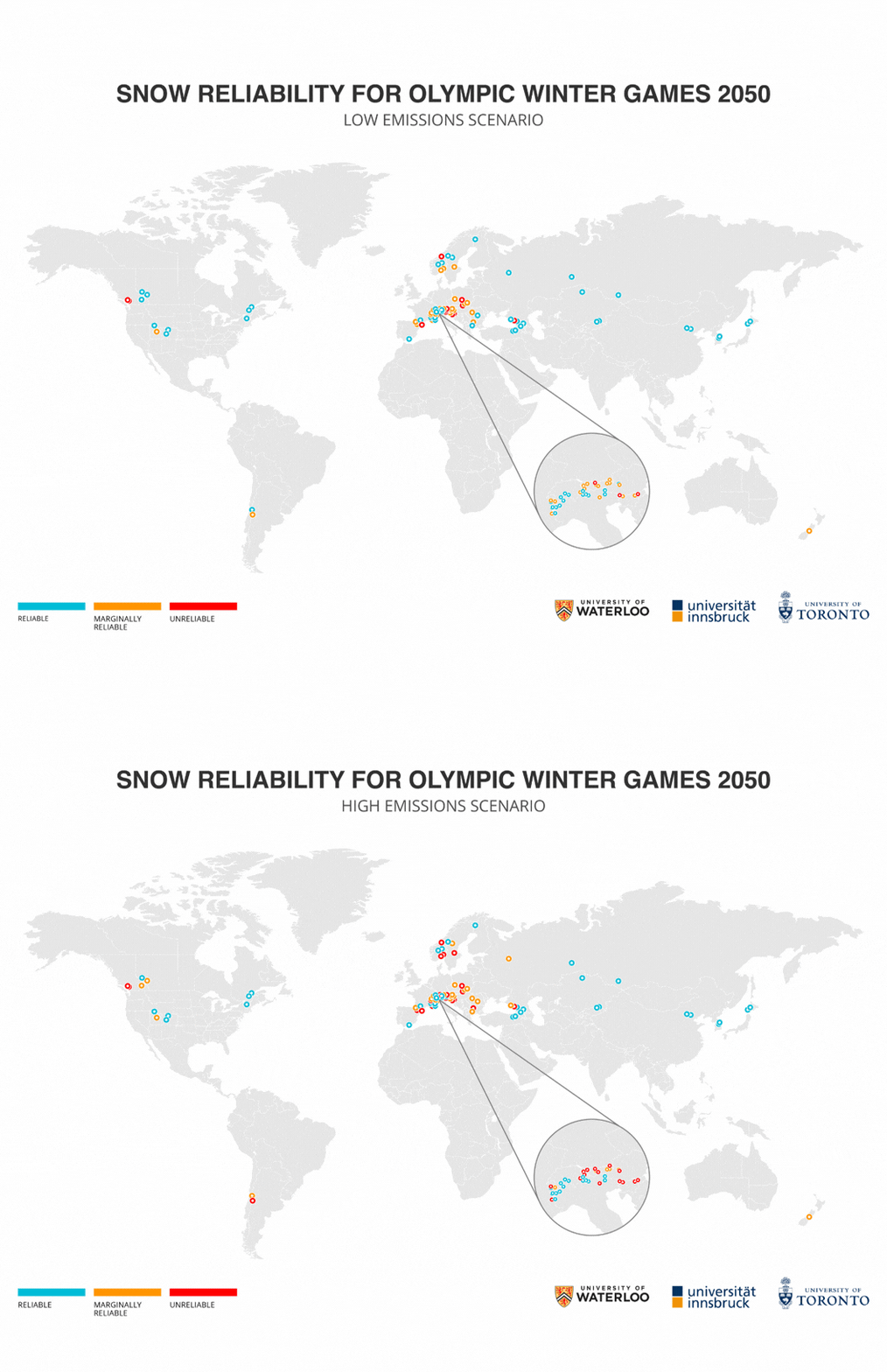
From low emissions scenario to high emissions, the Winter Olympic Games are losing 52% of host locations by 2050
The findings are stark. By 2050, nearly half of today’s reliable Winter Games host locations could be lost if carbon pollution continues on its current path. The risk is even greater for the Paralympics, which are typically held later in the season. Warmer temperatures and less reliable snow create tougher, and often unsafe, conditions for athletes.
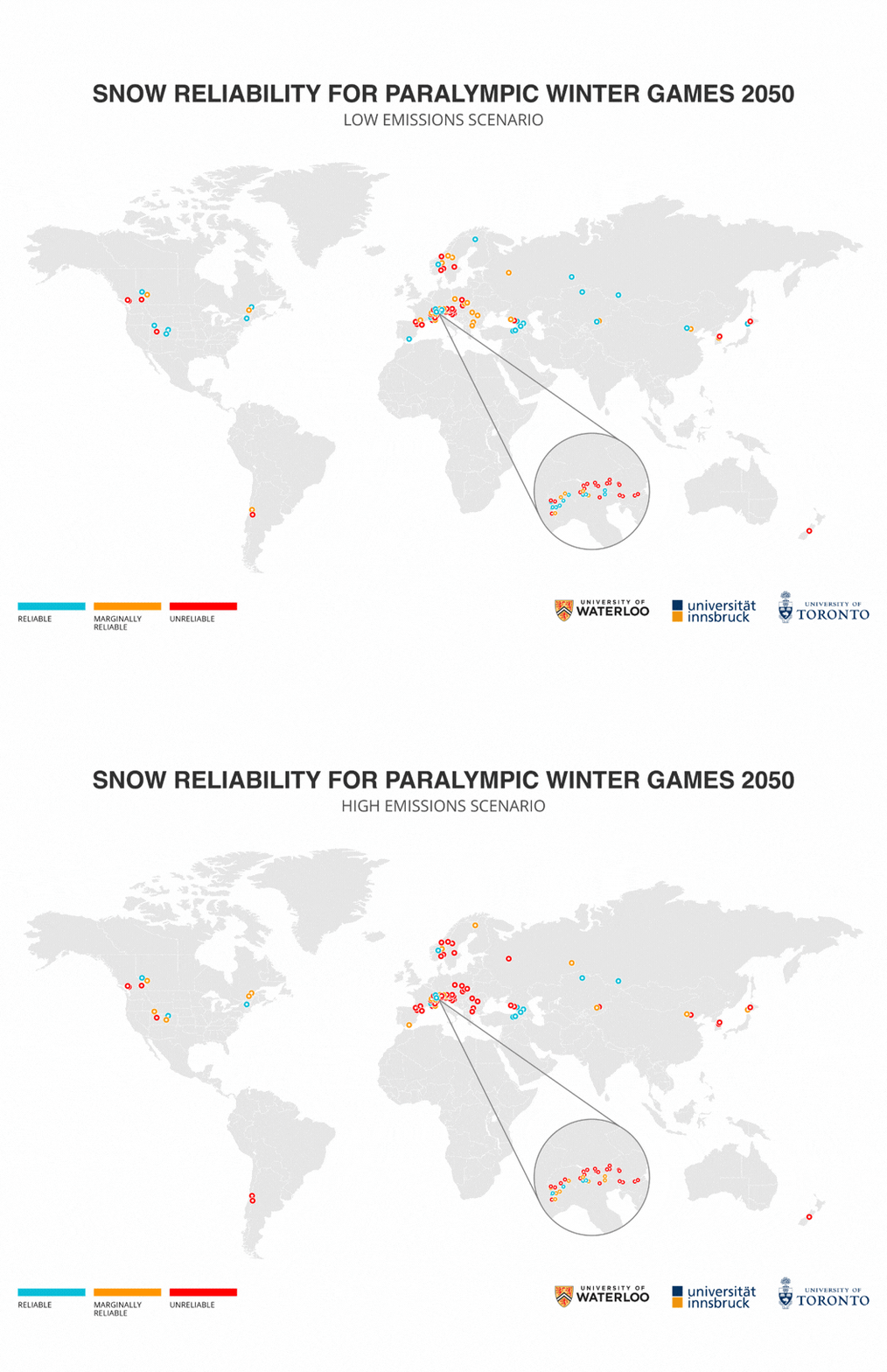
From low emissions scenario to high emissions, the Winter Paralympic Games are losing 82% of host locations by 2050
And if we look even further, by 2080, under a high emissions scenario, 68% of Winter Olympic Games and 96% of Winter Paralympic Games host locations will be gone.
The research makes clear that adaptation matters. Snowmaking, shifting schedules, and choosing higher-altitude venues can help, but only in the short term. Without mitigation - cutting carbon pollution at the source - the long-term future for the Winter Games is bleak, and so are winters that make them possible.
“We need mitigation to give adaptation a fighting chance.”
Dr Daniel Scott, professor in the Faculty of Environment at Waterloo and lead author on the paper.
As the world turns its attention to the Winter Games once again, this research is a reminder that the future of winter sports depends on decisions grounded in climate science, fairness, and serious action to cut pollution.
Dive deeper and read Daniel Scott's research here:
The Irony - Powered by Fossil Fuels. Undone by Fossil Fuels.
What is the biggest culprit of carbon pollution? Fossil fuels aka oil & gas.
This is a tough one for a country like Canada that relies on oil & gas as one of our exportable resources. We get it. It’s not an easy fix.
However, here is the thing, studies are clear that peak oil & gas demand is coming and the global demand will start declining by 2030. Yikes. Canada needs to work on other competitive resources like renewable energy and move off a resource that is literally killing our winters.
Winter Games, Sponsored by Shoulder Season
Athletes saw this coming. In a 2022 survey, 90% of Olympic winter athletes and coaches said they’re concerned about how climate change will affect the future of their sport. Rising temperatures are already leading to unsafe snow conditions, cancelled events, and higher injury risks, all while major sporting bodies continue to accept sponsorships from fossil fuel companies driving the crisis.
Ready to act?